
How to Organize a Small Bedroom Closet
Table of Contents
- Assess Your Space and Measure Before You Start
- Declutter and Decide What to Keep
- Small Closet Organization Ideas That Actually Work
- Closet Organizers for Small Closets: Tools That Maximize Space
- How to Organize a Deep Narrow Closet Layout
- Small Closet Organization on a Budget
- Maintain Your Organized Closet Long-Term
- Frequently Asked Questions
Last Updated: October 7, 2026
Assess Your Space and Measure Before You Start
Before you buy a single organizer to organize small bedroom closet space, measure your closet. Knowing your exact dimensions prevents costly mistakes and helps you choose tools that actually fit.
Start by measuring the width, depth, and height of your closet. Note where the door opens and how much clearance you need. Check the distance between your closet rod and the shelf above it. Mark any obstacles like pipes, vents, or electrical outlets. These details matter because they determine what storage solutions will work.
Next, measure your hanging space. How many inches of rod do you have? How high can clothes hang before hitting a shelf? For a small closet, vertical space is your only real advantage. Understanding it now saves time later.
Take photos of your closet from multiple angles. Write measurements directly on the photos. This becomes your planning reference. When you're shopping for organizers, you'll know exactly what fits.
Declutter and Decide What to Keep
Your closet can't organize itself if it's packed with clothes you don't wear. Decluttering comes before organizing.
Pull everything out. Yes, everything. Lay it on your bed or the floor. This is the only way to see what you actually own. Most people are shocked by how much they've forgotten about.
Sort into three piles: keep, donate, and trash. Be honest about the keep pile. Ask yourself: Do I wear this? Does it fit? Do I feel good in it? If the answer is no to any question, it goes.
The keep pile should be clothes you actually wear. Clothes that fit right now. Clothes that make you feel confident. Not aspirational clothes. Not "maybe someday" clothes. Real clothes for your real life.
Once you've decided what stays, count it. How many shirts? How many pants? How many dresses or jackets? These numbers guide your organizing strategy. A closet with 15 shirts needs different solutions than one with 50.
Small Closet Organization Ideas That Actually Work
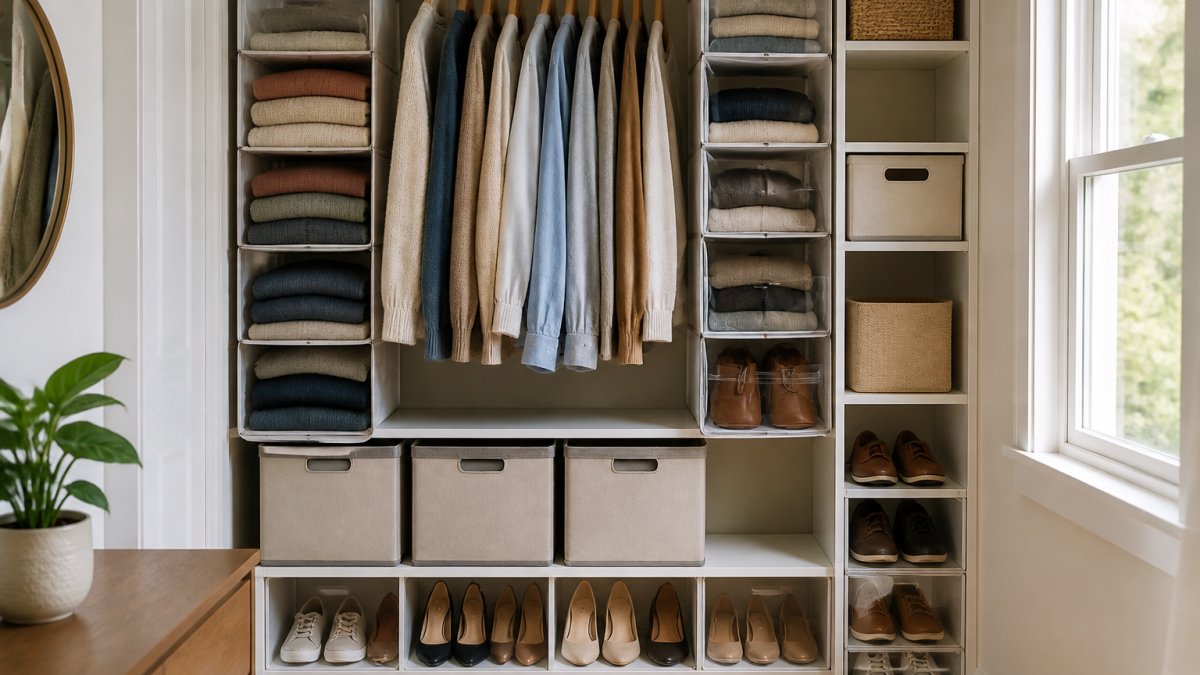
The best way to organize small bedroom closet space uses every inch of it. That means thinking vertically, using doors, and choosing the right tools.
Vertical storage is your secret weapon. Stack shelves higher. Use shelf dividers to create sections. Hang organizers on walls. The floor is wasted space in a small closet. Every item should be off the ground.
Double-hang your clothes. If your closet has one rod, add a second one below it. This instantly doubles your hanging capacity. Hang short items like shirts and jackets on the upper rod. Hang pants and folded sweaters on the lower rod. This works in closets as small as 24 inches deep.
Use your door. Over-the-door organizers hold belts, scarves, shoes, and accessories. The Modern Goods Living 5-Pocket Over the Door Hanging Organizer features five deep pockets designed to hold folded clothing, socks, and daily essentials. It's made from breathable, high-density non-woven fabric that keeps items fresh without taking up any floor space. At just $34.99, it transforms an empty door into functional storage.

Create zones for different clothing types. One section for work clothes. One for casual wear. One for shoes and accessories. Zones make it faster to find what you need. They also prevent the closet from becoming a jumbled mess again.
Use shelf dividers and risers. Stack folded sweaters with dividers between them so you can see each one. Risers lift items off the shelf, creating space underneath for storage bins or shoes.
Closet Organizers for Small Closets: Tools That Maximize Space
The right organizers make a small closet feel bigger. Choose tools designed for tight spaces, not oversized solutions.
Hanging storage organizers work well for items that don't need hangers. The Modern Goods Living Foldable Hanging Storage Organizer features three spacious layers with multiple compartments. It holds clothes, shoes, and accessories while hanging from your existing closet rod. Made from durable polyester, it collapses flat when not in use. At $23.99, it's affordable and portable for small apartments or dorms.

Rolling under-bed storage keeps seasonal items accessible without cluttering your closet. The Modern Goods Living Heavy-Duty Rolling Underbed Storage Bin has a crystal-clear lid so you see what's inside. The reinforced carbon steel frame supports heavy textiles. Four smooth-rolling wheels let you slide it out easily. At $59.99, it holds 30-40 liters of off-season clothes or extra bedding.
Freestanding garment racks add hanging and shelf space without wall installation. The Modern Goods Living Heavy-Duty Freestanding Garment Rack with Shelves features double hanging rods and four fabric shelves. Each rod holds up to 33 pounds. It's 66.1 inches tall and 42.1 inches wide, perfect for small bedrooms. At $69.99, it gives you instant wardrobe space without drilling holes.

Storage baskets and bins organize folded items on shelves. Choose clear containers so you can see what's inside without opening them. Fabric bins work better than plastic in closets because they breathe and prevent mustiness.
How to Organize a Deep Narrow Closet Layout
A deep closet is either a blessing or a nightmare, depending on how you organize it. Deep closets hide items in the back. Smart layout prevents that.
Create a reach zone. The front 12-18 inches of your closet should hold your most-worn items. Clothes you grab every week go here. Everything else goes behind.
5-Pocket Over the Door Hanging Organizer | Closet Storage Caddy →
Use the back wall. Mount a shelf or hanging organizer on the back wall to hold shoes, bags, or folded items. This prevents the back from becoming a dead zone where things disappear.
Angle your hangers. Face all hangers the same direction. This simple habit makes it obvious which items you wear. After a month, any hanger facing backward is an item you haven't touched.
Add a small shelf or riser halfway back. This creates a second level of storage and makes deep items more visible. You're forcing yourself to use the entire depth instead of just the front.
Install lighting if your closet is dark. A battery-powered LED strip costs under $15 and makes finding items much easier. You're more likely to wear clothes you can actually see.
Small Closet Organization on a Budget
You don't need expensive systems to organize a small closet. Smart choices with affordable tools work just as well.
Start with what you have. Before buying anything, use containers you already own. Shoeboxes, mason jars, and baskets from other rooms can hold small items. This costs nothing and tests whether an idea actually works.
Buy one category at a time. Don't overhaul your entire closet in one weekend. Organize shoes first. Then belts and scarves. Then folded items. Spreading purchases over a few weeks keeps costs down and lets you see what actually works before buying more.
Choose multi-use tools. A hanging organizer holds clothes, shoes, or accessories. A storage bin works under the bed or on a shelf. Tools that serve multiple purposes give you flexibility as your needs change.
Skip expensive custom systems. Pre-made organizers from Modern Goods Living cost $23-70 and work just as well as systems that cost hundreds. The 5-Pocket Over the Door Organizer at $34.99 and the Foldable Hanging Storage at $23.99 are both affordable and effective.
DIY where it makes sense. Shelf dividers can be cardboard, wood, or acrylic. Hanging rods can be tension rods or closet extenders. You don't need brand-name everything.
Prioritize vertical storage. Adding a second rod or hanging organizer costs less than buying more floor space. Vertical solutions are almost always cheaper than expanding sideways.
Maintain Your Organized Closet Long-Term
Organization only works if you maintain it. A system that falls apart in two weeks wastes time and money.
Set a weekly reset. Every Sunday, spend 5 minutes straightening your closet. Hang items that fell off. Return things to their zones. This prevents the slow slide back into chaos.
Rotate seasonally. Every three months, swap seasonal clothes. Store winter coats in summer. Store shorts in winter. This keeps your active closet lean and makes room for what you actually wear right now.
Do a mini-declutter quarterly. Every season, pull out items you haven't worn. Be ruthless. If you didn't wear it in three months, you won't wear it. Donate it and make space for clothes you love.
Replace organizers as needed. Hanging organizers wear out. Bins crack. Budget $10-15 per year for replacements. This keeps everything functional without breaking the bank.
Keep a donation box in your closet. When you try something on and it doesn't work, put it in the box immediately. Don't leave it on the floor or back on the hanger. Immediate removal prevents the pile-up.
Take a photo of your organized closet. After you finish organizing, photograph each section. When things get messy, you have a visual reference for how it should look. This makes resetting faster.
Small closet organization starts with measuring, decluttering, and choosing the right tools. At Modern Goods Living, we understand that small spaces need smart solutions. The Modern Goods Living 5-Pocket Over the Door Hanging Organizer, Foldable Hanging Storage Organizer, and Heavy-Duty Freestanding Garment Rack are designed specifically for small closets. Each tool maximizes vertical space without requiring installation. Start with one organizer that fits your biggest pain point, then add more as you see what works. Your small closet can hold everything you need, if you organize it right.
Frequently Asked Questions
How do I maximize a small bedroom closet without drilling or permanent changes?
Use over-the-door organizers, freestanding garment racks, and rolling storage bins to add capacity without damaging walls. An over-the-door hanging organizer like the 5-Pocket model ($34.99) instantly creates vertical storage for accessories, socks, and folded items. Freestanding racks work for renters and can hold shoes, belts, and extra clothing. Rolling bins slide under beds to store seasonal items. These solutions are removable, making them perfect for apartments or temporary arrangements.
What's the best way to organize clothes when closet space is limited?
Start by removing everything and keeping only items you wear regularly. Use vertical space with double hanging rods or shelf dividers to stack folded clothes. Store off-season items in under-bed rolling bins or hanging organizers. Group similar items together: all shirts in one section, pants in another, dresses on a separate rod. Use specialty hangers to double your hanging capacity. A foldable hanging organizer ($23.99) adds three layers of storage without taking floor space, perfect for shoes, belts, and scarves.
How can I organize a small closet on a budget without spending a lot?
Focus on free or low-cost solutions first: use shelf dividers from items you have, hang hooks on the inside of the closet door, and repurpose storage containers you already own. For affordable additions, tension rods ($10-20) create extra hanging space, and over-the-door organizers start at $34.99. Vertical storage is your cheapest space multiplier. Before buying anything, declutter ruthlessly to free up existing space. Many small closets feel cramped simply because they're overstuffed, not because they lack storage solutions.
What's the best way to organize shoes in a small closet?
Vertical shoe storage saves the most space. Use over-the-door organizers with pockets for flat shoes, or install a narrow shoe rack on the closet floor. For deep closets, a tiered shelf or shoe cubbies maximize the back wall. Rolling storage bins work well for seasonal shoes stored under the bed. Clear containers let you see what you have without opening them. Group shoes by type: everyday shoes on lower shelves, dressy shoes higher up. The 5-Pocket hanging organizer ($34.99) holds flat shoes in its deep pockets, freeing floor and shelf space.
