
How to Organize Under Bed Storage: A Complete Guide
Table of Contents
- Measure Your Bed Clearance and Plan Your Layout
- What to Store Under the Bed
- Choose the Right Under-Bed Storage Containers
- Step-by-Step Setup Process for Under-Bed Storage
- How to Lift a Bed for Storage Access
- Protect Stored Items from Dust, Moisture, and Pests
- DIY Under-Bed Storage Solutions
- Maintain Your Under-Bed Storage System
- Frequently Asked Questions
Last Updated: October 17, 2026
Measure Your Bed Clearance and Plan Your Layout
The first step to organize under bed storage is understanding what space you actually have to work with. Measure your bed's clearance height, depth, and width before buying any containers.
Bed clearance varies significantly depending on your frame type. Standard bed frames sit 12-18 inches off the ground. Platform beds may only offer 6-10 inches.
Measure height, depth, and width
Use a measuring tape to get three key dimensions. First, measure the height from the floor to the bottom of your bed frame.
Write these numbers down. You'll reference them when choosing containers. A 12-inch-tall bin won't fit under a bed with only 10 inches of clearance, no matter how perfect it seems.
Assess your bed frame type
Your bed frame type determines which storage solutions work best. Platform beds sit lower, so shallow containers work better than tall ones. Beds with legs allow easier access underneath.
Consider how the bed is positioned in your room too. If the bed is against a wall, you can only access storage from one or two sides.
What to Store Under the Bed
Choosing the right items for under-bed storage makes the difference between a functional system and a cluttered mess. Not everything belongs under your bed, but many items are perfect for this space.
Seasonal clothing and off-season items
Off-season clothing is ideal for under-bed storage. Winter coats, sweaters, and heavy jackets take up closet space you need year-round.
The same logic applies to summer clothes, lightweight jackets, and seasonal accessories. Heavy fabrics protect well in sealed containers, and you reclaim valuable closet space.
Bedding, linens, and decorative pillows
Extra sheets, pillowcases, and blankets fit perfectly under the bed. Keep backup bedding accessible without taking up linen closet space. Decorative pillows you don't use daily are also great candidates.
Store these items in breathable containers or fabric boxes. Cotton and linen storage bags work well for bedding because they allow air circulation while protecting against dust.
Shoes, purses, and accessories
Shoes take up surprising amounts of closet space. A clear under-bed storage bin lets you see your entire shoe collection at a glance. Purses, scarves, belts, and other accessories also store well under the bed.

Use clear containers so you can identify items without opening every bin. This saves time when you're getting ready.
What not to store under your bed
Some items don't belong under your bed, no matter how much space you need. Electronics and items sensitive to temperature fluctuations should stay elsewhere.
Avoid storing food, plants, or anything that attracts pests. Medications and supplements need climate control. Important documents belong in a safe or filing cabinet, not under the bed where moisture and dust accumulate.
Choose the Right Under-Bed Storage Containers
The right container makes organizing under bed storage easier and more effective. Different container types suit different purposes and storage styles.
Clear totes and transparent bins
Clear containers let you see what's inside without opening them. This saves time and reduces the frustration of searching through multiple bins.
Clear totes work well for clothing, shoes, and seasonal items. They're stackable, durable, and affordable.
The Heavy-Duty Rolling Underbed Storage Bin with Lid combines transparency with easy access.
Wheeled storage for easier access
Wheels transform under-bed storage from a chore into something genuinely convenient. Instead of reaching under the bed and pulling, you roll the container out smoothly.
Wheeled containers work on most floor types: hardwood, tile, and low-pile carpet. They're particularly valuable in small bedrooms where every inch counts.
Lidded containers and fabric boxes
Lidded containers provide protection from dust and moisture. Fabric storage boxes offer a softer, more stylish appearance than plastic bins.
The Linen Storage Bag uses a cotton-linen blend with moisture-resistant construction.

For larger storage needs, the Heavy-Duty Oxford Storage Bag offers 40L to 180L capacity options.

Step-by-Step Setup Process for Under-Bed Storage
To organize under bed storage effectively, follow a structured approach. This process prevents overwhelm and ensures everything stays organized long-term.
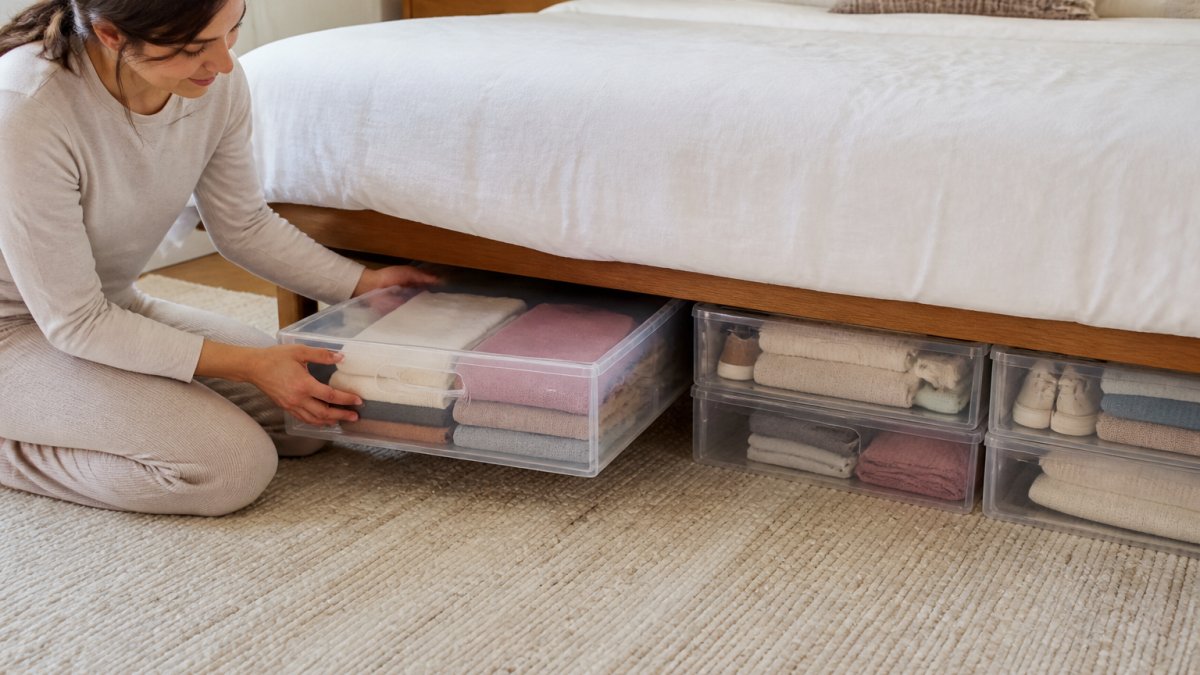
Step 1: Declutter and sort items
Before putting anything under your bed, sort through what you actually own. Pull out everything you're considering storing and be honest about what you use.
Ask yourself three questions: Do I use this regularly? Does it fit my life now? Is it in good condition? Items that fail these tests should go.
Step 2: Group similar items together
Organize items into categories before packing containers. All winter coats go together. All shoes go together. All extra bedding goes together. This prevents the chaos of mixed bins where you can never find what you need.
Grouping similar items also makes seasonal swaps easier. When spring arrives, you know exactly which bins hold winter clothing.
Step 3: Pack containers strategically
Don't just toss items into bins randomly. Roll clothing instead of folding it to save space and prevent wrinkles. Place heavier items on the bottom and lighter items on top.
Leave some breathing room in each container. Overstuffed bins are harder to access and can damage contents. Aim to fill containers about 80 percent full.
Heavy-Duty Rolling Underbed Storage Bin with Lid | 30L-40L Cart →
Step 4: Arrange for easy access
Position containers based on how often you access them. Items you'll need soon go toward the foot of the bed or the most accessible side.
Label each container clearly. Use a permanent marker on the container itself or attach adhesive labels. Include the contents and the date you stored items.
How to Lift a Bed for Storage Access
Sometimes you need to get under your bed to retrieve something or clean. Lifting your bed safely requires the right approach and proper technique.
Using bed risers for permanent elevation
Bed risers are the easiest solution if you need regular under-bed access. These blocks sit under each bed leg and raise the frame 4-8 inches higher.
Bed risers come in various heights and materials. Choose risers that match your bed's weight capacity and style. Installation takes minutes and requires no tools.
Safely lifting your bed temporarily
If you don't want permanent risers, you can lift your bed temporarily. Get help from another person.
Start by removing everything from under the bed. Clear the area completely.
Lower the bed slowly and carefully when you're finished. Move the supports out of the way first, then gently lower the frame back down.
Protect Stored Items from Dust, Moisture, and Pests
Items stored under your bed face unique challenges. Dust accumulates, moisture creeps in, and pests find their way into dark spaces. Proper protection keeps your stored items fresh and clean.
Use lidded containers and sealed storage
Sealed containers are your first line of defense against dust and pests. Lidded bins with tight-fitting covers work best. Fabric storage bags with closures also provide good protection.
Avoid open storage under your bed. Exposed items attract dust, moisture, and unwanted visitors. Even under a bed skirt, open storage isn't truly protected.
Add moisture-control solutions
Moisture under the bed can damage clothing, create musty odors, and encourage mold growth. Silica gel packets absorb excess moisture. Place a few packets in each storage container, especially in humid climates.
Replace silica gel packets every few months, or when they become saturated. You can also use activated charcoal as a natural moisture absorber and odor neutralizer.
Maintain airflow and prevent allergen buildup
Good airflow prevents moisture from concentrating in one spot. Don't pack storage containers so tightly that air can't circulate. Leave small gaps between bins if possible.
Vacuum under your bed every few months to reduce dust and allergen buildup. Use a vacuum with a HEPA filter if anyone in your household has allergies or asthma.
DIY Under-Bed Storage Solutions
Commercial storage containers work well, but DIY solutions can be budget-friendly and creative. Many household items repurpose perfectly for under-bed storage.
Budget-friendly alternatives to commercial bins
Wooden crates make attractive and sturdy storage containers. They cost less than commercial bins and add rustic charm to your bedroom.
Cardboard boxes work in a pinch, but they don't last as long as plastic or wooden containers.
Decorative baskets add style while providing storage. Choose baskets with handles for easier access.
Repurposing household items for storage
Old suitcases work surprisingly well for under-bed storage. They're sturdy, stackable, and add a vintage touch. Fill them with seasonal clothing or extra bedding.
Plastic storage bags compress items and save space. Vacuum-seal bags work especially well for bulky items like winter coats and comforters.
Dresser drawers that don't fit in your bedroom can become under-bed storage.
Maintain Your Under-Bed Storage System
Organizing under bed storage isn't a one-time project. Regular maintenance keeps your system working and prevents clutter from creeping back.
Create a retrieval and rotation schedule
Plan when you'll swap seasonal items. Mark these dates on your calendar. Spring and fall are natural times to rotate seasonal clothing and bedding.
When you retrieve items, check their condition. Look for signs of moisture, dust, or pest damage. Address any problems immediately before they spread to other stored items.
Clean and refresh stored items seasonally
Before storing items for months, make sure they're clean. Wash or dry-clean clothing. Wipe down shoes. Launder bedding and linens.
When you retrieve stored items at the start of a season, refresh them before using. A quick wash or airing out removes any musty odors. Sunlight naturally refreshes fabrics and kills odor-causing bacteria.
At Modern Goods Living, we understand that organizing your bedroom is about more than just finding space. The 3-Piece Foldable Storage Bin Set with Wheels combines practical design with modern style, giving you flexible storage that works with your lifestyle.
Frequently Asked Questions
What should I store under my bed?
Store seasonal clothing, off-season coats, extra bedding, linens, decorative pillows, shoes, purses, and accessories under your bed. Avoid storing items that require temperature control, electronics prone to moisture damage, or anything that emits odors. Use clear containers so you can identify contents without opening them, and keep frequently accessed items toward the front for easy retrieval.
What containers work best for under-bed storage?
Clear plastic totes with lids offer visibility and dust protection, while wheeled bins like the Heavy-Duty Rolling Underbed Storage Bin make retrieval effortless. For textiles and seasonal items, fabric storage bags with moisture-resistant construction work well. Choose containers that fit your bed's clearance height, most under-bed storage needs low-profile options. Lidded containers protect against dust, allergens, and pests.
How can I keep items under my bed clean and dust-free?
Use lidded or sealed containers to create a barrier against floor dust and lint. Place moisture-control packets or cedar blocks inside to prevent mildew and odors. Vacuum the floor under your bed every few months, and consider using bed risers to increase clearance for easier cleaning. Store items in breathable fabric bags if using soft storage, and avoid the area directly under your bed if your room has poor airflow or high humidity.
How do I organize my bedroom with too much stuff?
Start by sorting items into categories: keep, donate, and discard. Use under-bed storage for off-season clothing and bedding, and maximize vertical space with storage bins on shelves. Invest in multi-functional furniture like beds with built-in drawers. Group similar items together and label containers so everything has a designated spot. Under-bed storage can free up closet and floor space, making your bedroom feel larger and more organized.
