
Is Expensive Cookware Worth It? A Durability & Value Guide
Table of Contents
- What Makes Expensive Cookware Different
- Expensive vs. Cheap Cookware: Where Quality Actually Matters
- How Much Should a Good Pan Cost
- How Long Does Cookware Last and What Affects Lifespan
- Cookware Set vs. Individual Pieces: Which Strategy Saves Money
- Is Expensive Cookware Worth the Investment for Your Kitchen
- Frequently Asked Questions
Last Updated: October 5, 2026
What Makes Expensive Cookware Different
When you pick up a premium pan versus a budget one, the difference is immediately obvious, raising the question of whether expensive cookware worth it for your kitchen. The weight feels different.
Expensive cookware typically uses thicker materials. A quality stainless steel pan has multiple layers, often aluminum or copper sandwiched between steel, that distribute heat evenly across the cooking surface.
The nonstick coating matters too. High-quality cookware uses durable nonstick surfaces that resist scratching and maintain their release properties after years of use.
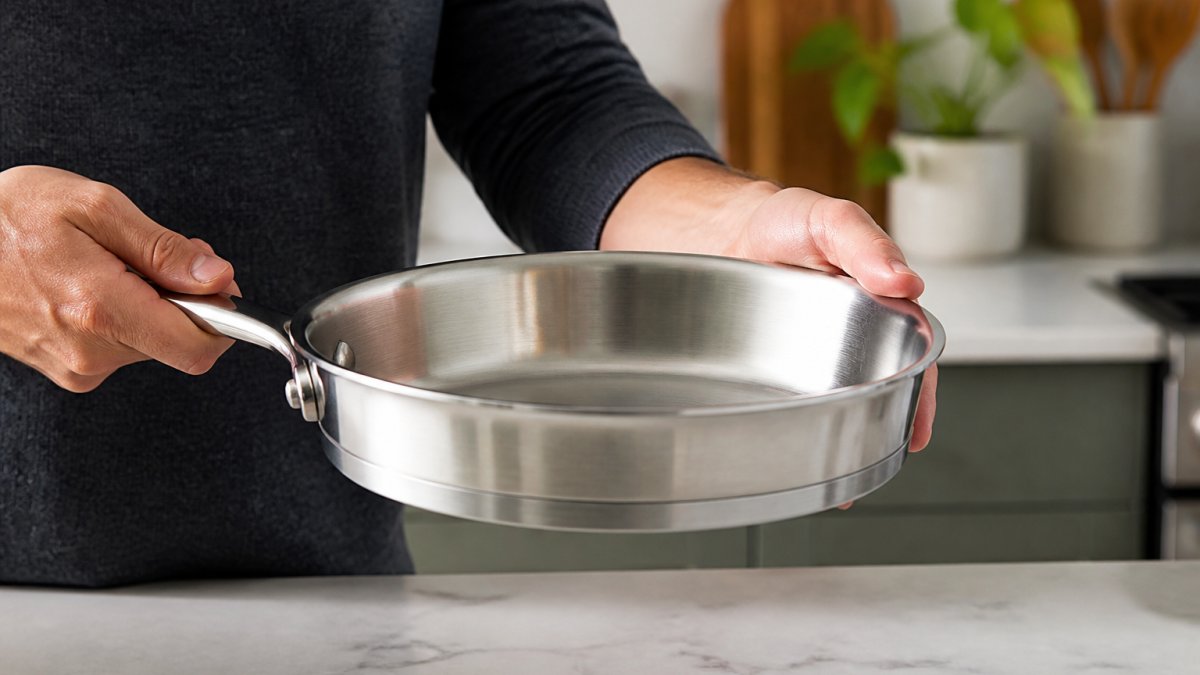
Build quality and craftsmanship also separate the categories. Premium cookware often features hand-inspected pieces, reinforced rivets, and seamless construction. Budget cookware cuts corners with weaker handles, loose rivets, and inconsistent manufacturing quality.
The lid quality is another tell. Expensive cookware comes with tempered glass lids that stay clear and don't warp. Cheap lids cloud over time and fit poorly, letting heat escape during cooking.
At Modern Goods Living, we've found that customers who invest in quality cookware report fewer frustrations with everyday cooking. The difference compounds over time, a pan that performs well today will perform well in five years.

Expensive vs. Cheap Cookware: Where Quality Actually Matters
Not every piece of cookware needs to be premium. The reality is more nuanced than "buy expensive or regret it."
Expensive cookware excels at heat distribution and temperature control. If you're searing meat, making delicate sauces, or cooking frequently, this matters. The difference between a $30 pan and a $120 pan becomes obvious within the first month of regular use.
Cheap cookware works fine for boiling water, heating soup, or occasional cooking. If you use a pot once a month to make pasta, spending $100 on it doesn't make sense. The performance difference won't be noticeable for basic tasks.
The gap narrows for specific uses. A Dutch oven, whether expensive or budget, will braise meat effectively. A nonstick omelet pan benefits hugely from quality construction, but a stainless steel stockpot performs similarly across price ranges.
Here's where most people get the math wrong: they compare upfront purchase price without considering lifespan. A cheap pan at $25 that lasts two years costs $12.50 per year. A premium pan at $120 that lasts 15 years costs $8 per year.
Material choice affects this calculation too. Cast iron cookware, whether expensive or budget, performs nearly identically once seasoned. Enameled cast iron varies more by brand, but even budget options deliver solid performance.
How Much Should a Good Pan Cost
The question isn't really "how much should a good pan cost" but rather "what are you actually cooking, and how often?" Price only makes sense once you know the job the pan has to do.
Start with a cost-per-use framework instead of a sticker price. Divide the purchase price by the number of times you realistically expect to use the piece before it wears out. A $25 nonstick skillet used three times a week for two years works out to roughly $0.08 per use. A $120 stainless skillet used three times a week for fifteen years works out to roughly $0.05 per use. The premium pan is cheaper per use, but only if you actually cook that often. Run the same math on a $200 Dutch oven you use twice a year and the per-use cost balloons past $6, which is why frequency, not price, drives the verdict.
Here is a practical price band by piece, based on what construction actually costs to produce:
- Everyday nonstick skillet (8-10 in): $25-$60. You are paying for the coating and the base thickness, not the body. Replace every 2-5 years.
- Stainless steel skillet or saute pan: $40-$150. The jump from $40 to $150 buys a thicker aluminum or copper core, better cladding to the rim, and a riveted handle that will not loosen. This is where premium construction shows up most in everyday cooking.
- Carbon steel skillet: $30-$70. Cheap and premium versions perform similarly once seasoned; you are mostly paying for handle comfort and finish.
- Enameled Dutch oven (5-7 qt): $60-$400. The low end uses thinner enamel that chips more easily; the high end uses thicker enamel and a heavier cast body. Both braise well.
- Stockpot (8-12 qt): $30-$120. For boiling and simmering, a thin base is fine. Premium here buys durability and a better lid fit, not better food.
- Cast iron skillet: $20-$50. Bare cast iron is the rare case where the cheapest option is often the best value.
For a complete set, the math is different. A basic 8-piece set from Modern Goods Living's Maifan Stone Non-Stick Cookware Set starts at $149.99 and covers pots, pans, lids, and utensils, enough to run a kitchen without buying pieces you will never touch. Budget sets often cost less upfront but pad the box with redundant sizes of the same pan, so you pay for storage, not cooking.
If you want a single rule: spend on the pieces you touch every day (skillet, saute pan, everyday pot), and stay modest on the pieces you touch rarely (stockpot, specialty pans, second Dutch oven). That is where the money earns its keep.
How Long Does Cookware Last and What Affects Lifespan
Most cookware lifespan claims are marketing, not measurement. The honest way to judge durability is to look at three things the manufacturer cannot easily fake: the warranty terms, whether the piece can be repaired, and how the material actually fails.
Warranties as a durability signal. A warranty is the manufacturer's own estimate of how long the product should survive normal use. A limited lifetime warranty on stainless steel or cast iron is common because those materials rarely fail structurally. A 1-2 year warranty on nonstick is equally telling: the maker knows the coating is the limiting factor.
Repairability. Cast iron and carbon steel can be stripped, reseasoned, and returned to service indefinitely; a rusted pan is a weekend project, not a replacement. Stainless steel can be re-riveted or have a handle replaced by a repair shop in many cases. Enameled cast iron cannot be repaired once the enamel chips, the exposed iron will rust, and the piece is effectively done.
Material-specific failure modes.
- Bare cast iron: fails only through rust or cracking from thermal shock. With basic care, a skillet can outlive its owner.
- Carbon steel: same story, rust is the only real enemy, and it is reversible.
- Stainless steel (clad): fails through warping (thin bases), delamination of the cladding (rare, usually from overheating an empty pan), or loose rivets. A well-made clad pan commonly lasts 10-20 years.
- Enameled cast iron: fails when the enamel chips, usually from thermal shock (cold water in a hot pot) or metal utensils. Chips are permanent.
- Nonstick (PTFE or ceramic): fails when the coating scratches, flakes, or loses release. Expect 1-3 years for budget coatings and 3-7 years for better ones under regular use. No nonstick pan is a lifetime purchase.
What actually shortens lifespan. The usual suspects are thermal shock (running a hot pan under cold water), overheating an empty pan, dishwasher detergent on aluminum or nonstick, metal utensils on coated surfaces, and stacking pans without protection. None of these are about price, a $300 pan treated badly will fail before a $40 pan treated well.
Maifan Stone Non-Stick Cookware Set – Induction & Gas Compatible →
The practical takeaway: buy nonstick expecting to replace it, buy cast iron and carbon steel expecting to hand it down, and buy stainless steel expecting a decade or more if you avoid thermal shock and empty-pan overheating. Price affects how long a pan lasts only insofar as it buys thicker cladding, better rivets, and a coating that survives more cycles, not because expensive metal is magically tougher.
Cookware Set vs. Individual Pieces: Which Strategy Saves Money
Buying a complete cookware set feels efficient. One purchase, one box, everything you need.
The problem: most people don't need everything in the set. A typical 12-piece set includes three or four sizes of the same pan, multiple pot sizes, and lids you'll never use. You're paying for pieces that sit unused in your cabinet.
Individual pieces let you buy exactly what you cook with. If you make omelets weekly, invest in a quality omelet pan. If you never braise, skip the Dutch oven. This approach costs more per item but less overall because you're not paying for redundancy.
The math changes based on your cooking habits. Someone who cooks daily benefits from a complete set because they'll use most pieces. Someone who cooks occasionally wastes money on a set.
Modern Goods Living's Maifan Stone Non-Stick Cookware Set offers multiple configurations, 8-piece, 10-piece, 12-piece, 13-piece, and 17-piece options. This flexibility lets you choose the set size that matches your actual cooking needs rather than forcing you into a one-size-fits-all package.
Sets also provide consistency. All pieces heat similarly, use matching lids, and coordinate aesthetically. Building piecemeal means you might end up with mismatched cookware from different manufacturers.
The best strategy for most people: start with a small, quality set, then add individual pieces as needed. This avoids overspending upfront while building a cohesive, functional kitchen.
Is Expensive Cookware Worth the Investment for Your Kitchen
The honest answer depends on three factors: how often you cook, what you cook, and how long you plan to keep your cookware.
If you cook daily, expensive cookware worth it pays for itself. Better heat distribution means faster cooking and fewer burnt dishes. Durable construction means you're not replacing pans every year.
If you cook occasionally, expensive cookware is harder to justify. You won't use it enough to appreciate the performance difference. A mid-range option delivers 80% of the benefits at 50% of the cost.
If you're building a kitchen from scratch, expensive cookware makes sense for pieces you'll use constantly, a primary skillet, everyday pot, and Dutch oven.
The sustainability angle matters too. Buying expensive cookware once and keeping it for 15 years creates less waste than replacing cheap cookware every two years.
Consider your cooking style. If you sear meat, make sauces, or work with precise temperature control, performance differences matter. If you boil water and heat leftovers, those differences barely register.
The warranty is worth examining. A 10-year or lifetime warranty on expensive cookware suggests the manufacturer stands behind durability.
Choosing between expensive and budget cookware isn't about price. It's about matching your investment to your actual cooking needs and habits.
Modern Goods Living's Maifan Stone Non-Stick Cookware Set bridges this gap with quality construction at accessible pricing.
Frequently Asked Questions
Does expensive cookware last longer than budget cookware?
Yes, generally. Premium cookware uses thicker materials, better heat distribution technology, and superior non-stick coatings that resist wear. Budget cookware often has thin bases that warp and non-stick surfaces that degrade within 1-2 years. High-quality pans can perform reliably for 5-10+ years with proper care, making the higher upfront cost worthwhile over time when calculated as cost per use.
Which cookware is worth spending more on?
Dutch ovens, skillets, and stock pots justify premium pricing because you use them frequently and they handle high heat. These pieces benefit most from superior heat retention and durability. Specialty items like omelet pans or small saucepans see less use, so budget options work fine. Start by upgrading the pieces you cook with daily, then add others as your budget allows.
Is it better to buy cookware as a set or piece by piece?
Buying individual pieces gives you flexibility to choose quality where it matters most and avoid paying for items you won't use. Sets offer convenience and often cost less per piece, but you may end up with sizes or types that don't fit your cooking style. For most home cooks, a hybrid approach works best: buy a few essential premium pieces individually, then add complementary items as needed.
What's the difference between expensive and cheap cookware?
Expensive cookware typically features thicker aluminum or copper bases for even heat distribution, durable non-stick coatings or seasoned surfaces, stainless steel construction that resists corrosion, and better craftsmanship. Budget cookware uses thin materials that heat unevenly, lower-quality non-stick that wears quickly, and weaker handles. Premium options also come with longer warranties and better customer support, reflecting their intended lifespan.
