
Modern Home Decor for Small Spaces: A Planning Guide
Table of Contents
- Measure Your Space and Plan Your Layout
- Small Living Room Layout Ideas That Work
- Space-Saving Furniture for Small Spaces
- Small Apartment Storage Ideas That Reduce Clutter
- How to Make a Small Room Look Bigger
- Budget-Friendly and Renter-Friendly Design Solutions
- Modern Home Decor for Small Spaces: Bringing It Together
- Frequently Asked Questions
Last Updated: October 12, 2026
Measure Your Space and Plan Your Layout
Modern home decor for small spaces starts with one simple step: know exactly what you're working with. Grab a measuring tape and measure your room's length, width, and ceiling height. Write these numbers down. Then measure doorways, windows, and any permanent fixtures like radiators or built-in shelves. This takes 15 minutes and changes everything.
Next, sketch your layout on graph paper or use a free online tool. Place your largest piece of furniture first, usually the sofa or bed. Then add other pieces around it. This prevents the common mistake of buying furniture that looks good in a store but doesn't fit your actual space.
At Modern Goods Living, we recommend thinking about traffic flow. You need a clear path from the door to the main seating area. If furniture blocks that path, your room will feel cramped even if it's technically spacious. Move pieces until people can walk through without squeezing past anything.
Consider your lifestyle too. If you work from home, you need desk space. If you host friends, you need seating. If you have hobbies, you need storage for supplies. Your layout should support what you actually do in the space, not what a magazine suggests.
Small Living Room Layout Ideas That Work
The best small living room layouts use vertical space and avoid floating furniture in the middle of the room. Push your sofa against a wall. This anchors the space and makes it feel intentional rather than cramped.
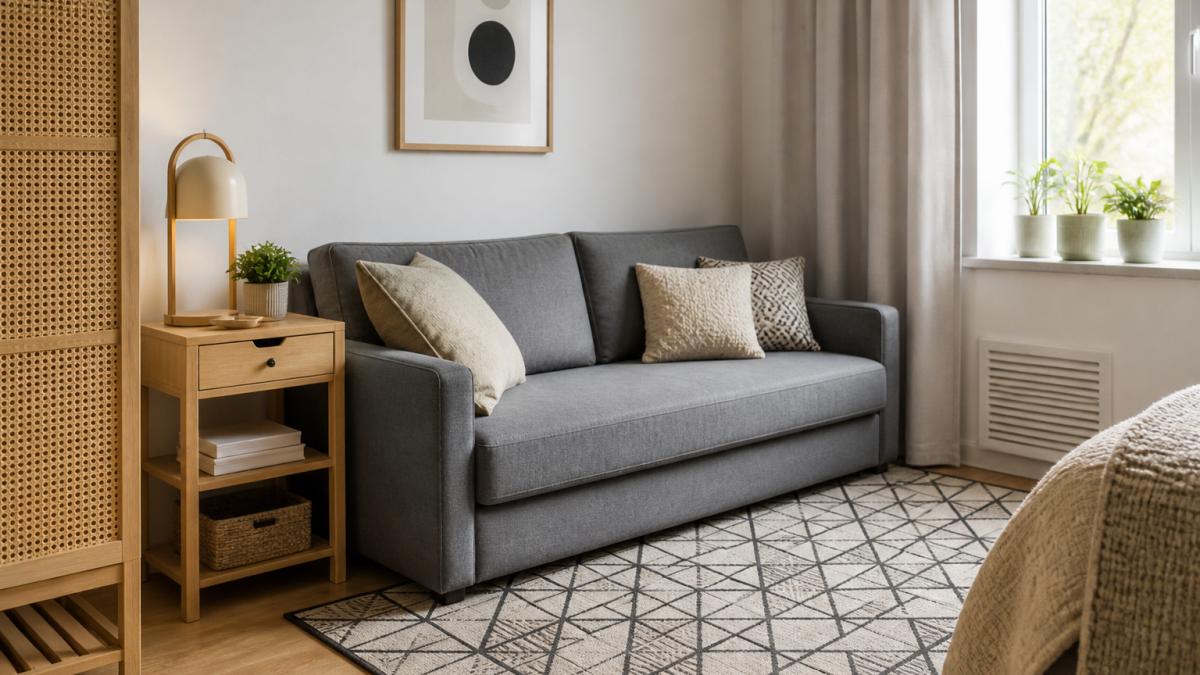
Create zones within your room. A seating zone near the window, a sleeping zone in one corner, a work zone in another. Rugs help define these zones without walls.
Consider an L-shaped seating arrangement if you have two walls available. A sofa on one wall and armless chairs on the adjacent wall creates seating for multiple people without eating up floor space. Armless chairs take up roughly 30 percent less visual space than traditional upholstered chairs.
A corner desk works well in small living rooms. It tucks into dead space and doesn't protrude into the room. If you don't have a corner, a narrow console table against a wall serves as a workspace and doesn't block movement through the room.
Keep pathways clear. The space between your sofa and a TV stand, between the door and your bed, between furniture pieces, these gaps should be at least 18 inches wide. This prevents the room from feeling like an obstacle course.
Space-Saving Furniture for Small Spaces
Space-saving furniture for small spaces does one of two things: it takes up less floor area, or it serves multiple purposes. The best pieces do both.
Choosing the Right Scale and Proportion
Furniture scale matters more in small rooms than anywhere else. A sofa designed for a large living room will dominate a small one. Look for compact seating: loveseats instead of sectionals, chairs without arms instead of recliners, ottomans that double as storage instead of side tables.
The rule is simple: your largest furniture piece should take up no more than one-third of your room's floor space. If your room is 200 square feet, your sofa should occupy roughly 65 square feet or less. This leaves breathing room and prevents the space from feeling suffocating.
Leg height matters too. Furniture with exposed legs, rather than skirted bases, makes a room feel more open. You can see the floor underneath, which tricks your eye into perceiving more space. Low-profile furniture works the same way. A bed frame that sits close to the ground feels less intrusive than a tall four-poster bed.
Multifunctional Pieces That Earn Their Place
In small spaces, every piece of furniture should do at least two jobs. A storage ottoman holds blankets and serves as extra seating. A Murphy bed folds into the wall and becomes a desk or shelving during the day. A coffee table with drawers stores remotes, magazines, and coasters.
The Narrow Bedside Table with Storage Shelf is a perfect example. At just under 10 inches wide, it fits into tight corners where traditional nightstands won't. It has a top surface for a lamp and phone, plus enclosed storage below for books and personal items. The smooth caster wheels mean you can move it to a sofa end table or vanity organizer in seconds.

Look for pieces with built-in storage: beds with drawers underneath, shelving units that double as room dividers, benches with hidden compartments. These eliminate the need for separate storage furniture, which saves floor space and reduces visual clutter.
Nesting tables are another smart choice. Two or three tables that stack together take up the space of one table but give you flexibility. Pull them apart when you need extra surfaces, stack them when you don't.
Small Apartment Storage Ideas That Reduce Clutter
Storage is the secret to making small apartments feel spacious. Too much visible stuff makes even a large room feel cramped. The goal is to hide what you don't use daily and display only what you love.
Use vertical storage aggressively. Floor-to-ceiling shelving uses space that would otherwise sit empty. Wall-mounted cabinets, floating shelves, and pegboards all add storage without taking up floor space. This is especially important in bedrooms and living rooms where floor space is precious.
Under-bed storage containers hold seasonal items, extra linens, and things you rarely need. Vacuum-seal bags compress bulky items like winter coats and blankets. A small apartment with smart under-bed storage feels more open than one with items stacked in corners.
Closet organization systems make a huge difference. Slim velvet hangers take up less space than wooden ones. Shelf dividers keep stacks from toppling over. Hanging organizers on the back of closet doors add storage without expanding the closet itself.
Use clear storage containers so you can see what's inside without opening them. This prevents buying duplicates and helps you find things quickly. Label everything. A well-organized small space feels intentional and calm, not chaotic.
How to Make a Small Room Look Bigger
Making a small room look bigger involves light, color, and clever visual tricks. You're not actually expanding the space, but you're changing how your brain perceives it.
Lighting Strategies for Compact Rooms
Poor lighting makes small rooms feel cramped and dark. Good lighting makes them feel open and inviting.
Narrow Bedside Table with Storage Shelf →
Layer your lighting. Use overhead lights, task lighting, and accent lighting together. A ceiling light provides general illumination. A desk lamp or reading light handles task work. Wall sconces or small accent lights add depth and make the space feel larger.
The Compact Ceiling Fan with Light & Remote combines two functions in one fixture. It provides overhead light and air circulation without requiring separate ceiling space. The remote control means you adjust settings from anywhere in the room, and the quiet operation won't disturb sleep or focus.

Position lights to avoid harsh shadows. Shadows make rooms feel smaller and more cramped. Soft, diffused light, from lamps with fabric shades rather than bare bulbs, feels more open and welcoming.
Natural light is your best tool. Keep windows unobstructed. Use sheer curtains instead of heavy drapes. They filter sunlight without blocking it. If your windows are small, mirrors opposite them reflect light around the room and make it feel brighter.
Color Palettes and Reflective Surfaces
Light colors make small spaces feel larger. Whites, creams, soft grays, and pale blues all expand the perceived space. A monochromatic color scheme, using different shades of the same color, creates cohesion without visual clutter.
This doesn't mean your room has to be boring. Add character with artwork, plants, and decorative accessories. But keep your walls, larger furniture pieces, and flooring in a tight color palette. Limit yourself to two or three main colors plus accent colors.
Reflective surfaces bounce light around and create depth. Mirrors are the obvious choice, but glossy paint, shiny tiles, and polished wood all work. A large mirror opposite a window reflects natural light throughout the room. Smaller mirrors on shelves add visual interest while expanding the sense of space.
The Modern Geometric Washable Rug works well in small spaces because the contemporary pattern adds visual interest without overwhelming the room. The low-pile weave doesn't create bulk, and the non-slip backing keeps it anchored. A rug anchors a seating area and defines space without walls.

Avoid dark colors on large surfaces. A dark accent wall might look sophisticated, but in a small room it makes the space feel like a cave. Save dark colors for small accessories like throw pillows or artwork.
Budget-Friendly and Renter-Friendly Design Solutions
You don't need to spend a lot to make a small space beautiful. You also don't need to commit to permanent changes if you're renting.
Start with what you have. Rearrange existing furniture before buying new pieces. A fresh layout often solves more problems than new furniture does. Move your sofa to a different wall. Flip your bed orientation.
Paint is the cheapest way to transform a space, but renters often can't paint. Instead, use removable wallpaper, fabric wall hangings, or large artwork to add color and pattern.
Shop secondhand. Thrift stores, Facebook Marketplace, and Craigslist have quality furniture at a fraction of retail prices. A vintage dresser or bookshelf often has better construction than new budget options.
Invest in one or two quality pieces that anchor your space. A good sofa or bed is worth the money because you'll use it daily and it lasts years.
Add personality with inexpensive accessories. Throw pillows, plants, artwork, and books cost little but completely change how a room feels. The Modern Stripe Cushion Cover in multiple colors lets you update your look without buying new pillows.
Use storage as decoration. Beautiful baskets, wooden crates, and open shelving filled with organized items look intentional and stylish. This approach combines function and aesthetics, which is essential in small spaces where every piece must earn its place.
Modern Home Decor for Small Spaces: Bringing It Together
Modern home decor for small spaces works when every element serves a purpose. Start by measuring and planning. Choose furniture that fits your room's scale and serves multiple functions. Use vertical space for storage. Layer lighting to create brightness and depth. Stick to a tight color palette with reflective surfaces to expand the visual space.
The pieces you choose matter less than how you arrange them. A small room with intentional furniture placement, good lighting, and smart storage feels spacious and calm. A large room with random furniture and clutter feels cramped and chaotic.
Modern Goods Living specializes in curated pieces designed for real living spaces. The Narrow Bedside Table with Storage Shelf, Compact Ceiling Fan with Light & Remote, Modern Geometric Washable Rug, and Modern Stripe Cushion Cover all solve specific small-space challenges while looking beautiful.
Start with one or two key pieces that address your biggest pain points. A sofa that fits your room. A storage solution for your clutter. A lighting fixture that brightens dark corners. Build from there. Small spaces don't require expensive overhauls. They require smart choices and intentional design.
Small spaces challenge you to be intentional about what you bring in and how you arrange it. That constraint is actually an advantage. When every piece matters, you end up with a home that's more thoughtful and personal than a larger space filled with unnecessary items.
Frequently Asked Questions
What is the best furniture arrangement for a small living room?
Start by placing your largest piece (sofa or bed) against the longest wall to anchor the space. Position secondary pieces at right angles to create zones without blocking sightlines. Use vertical storage and wall-mounted decor to keep floor space open. Multifunctional furniture like storage ottomans or narrow nightstands maximizes utility without crowding. Measure your room first and sketch a layout to test proportions before moving anything.
What color palette makes a small room feel larger?
Light, neutral colors (white, soft gray, beige) reflect light and create visual openness. A tight color palette, using 2-3 coordinating colors throughout, maintains visual continuity and prevents the space from feeling fragmented. Add character with accent colors through textiles like cushion covers or rugs rather than paint. Modern Stripe Cushion Covers ($12.99) in soft tones let you introduce color without overwhelming a compact room.
Why should I invest in quality, durable furniture for a small space?
In small spaces, every piece must earn its place and last. Lower-quality furniture wears out faster, forcing replacements that waste money and resources. Durable pieces like the Narrow Bedside Table in sustainably harvested bamboo withstand daily use and can adapt as your needs change, some even have wheels for flexible arrangement. Quality goods reduce waste, save money long-term, and let you build an intentional home rather than constantly upgrading throwaway items.
