
Sustainable Home Storage Online: A 2026 Buying Guide
Table of Contents
- What Makes Sustainable Home Storage Worth the Investment
- Eco-Friendly Storage Bins: Materials That Actually Last
- Sustainable Home Organizers for Every Room and Need
- Recycled Plastic Storage Containers: Durability and Performance
- Sustainable Storage Solutions for Small Spaces
- How to Verify Sustainability Claims and Certifications
- Comparing Storage Options: Price, Capacity, and Lifespan
- Conclusion: Building a Sustainable Storage System
- Frequently Asked Questions
Last Updated: October 18, 2026
What Makes Sustainable Home Storage Worth the Investment
Buying sustainable home storage online is a practical investment in your space and the environment.
Most people assume sustainable storage costs far more. In reality, the price gap is small and the durability gap is enormous.
At Modern Goods Living, we've curated storage solutions built for real life: seasonal rotations, closet reorganizations, moves, and years of daily use.
Genuine sustainable storage differs from greenwashed options in three ways: material transparency, proven durability, and honest sizing. Below, we cover the materials that matter, room-by-room solutions, and how to verify sustainability claims.
Eco-Friendly Storage Bins: Materials That Actually Last
The material your storage bin is made from determines how long it lasts, how well it protects your items, and its environmental impact.
Natural Fibers: Seagrass, Jute, Rattan, and Water Hyacinth
Natural fiber storage baskets look beautiful and feel intentional. Seagrass, jute, rattan, and water hyacinth are renewable and break down naturally at end of life.
These materials work best in dry environments. Seagrass and water hyacinth are the most moisture-resistant, suiting closets and bedrooms; jute and rattan absorb moisture in prolonged humidity. For bathrooms or laundry rooms, choose ventilated designs.
The limitation: natural fiber baskets don't stack neatly and take up more visual space than plastic.
Recycled and Post-Consumer Materials
Recycled plastic storage containers solve the durability problem natural fibers face. Made from post-consumer recycled plastic, they stack efficiently, resist moisture, and handle rough treatment without degrading.
The trade-off is real: recycled plastic still comes from petroleum and will eventually reach a landfill or ocean. But it diverts waste and reduces demand for new plastic.
Look for bins labeled with a recycled content percentage. Higher percentages (50% or more post-consumer material) indicate a stronger commitment to circular manufacturing, and some brands offer take-back programs for worn bins.
Organic Cotton and Linen Blends
Cotton-linen storage bags bridge natural fibers and synthetics. The blend adds moisture resistance pure cotton lacks while staying breathable, and organic cotton means no synthetic pesticides or fertilizers in production.

The Organic Crop Improvement Association standards verify organic cotton production practices. When shopping, look for this certification rather than relying on brand claims alone.
Linen storage bags excel at protecting delicate items: the thickened, moisture-resistant construction shields clothes, quilts, and textiles from humidity and dust. The Modern Goods Living Linen Storage Bag comes in four sizes (18L to 210L) for $26.99, and the off-white canvas design stacks neatly to maximize vertical space.
This suits anyone prioritizing breathability and natural fibers without the limits of pure jute or rattan, especially closet and bedroom storage.
Sustainable Home Organizers for Every Room and Need
Sustainable storage isn't one-size-fits-all. Rooms differ in humidity, access patterns, and aesthetics, so the right organizer matches your specific use case.
Closet and Bedroom Organization
Bedroom storage handles seasonal rotations and everyday items, so you need dust protection with easy access.
The Modern Goods Living 3-Piece Foldable Storage Bin Set with Wheels offers both vertical stacking and horizontal mobility.

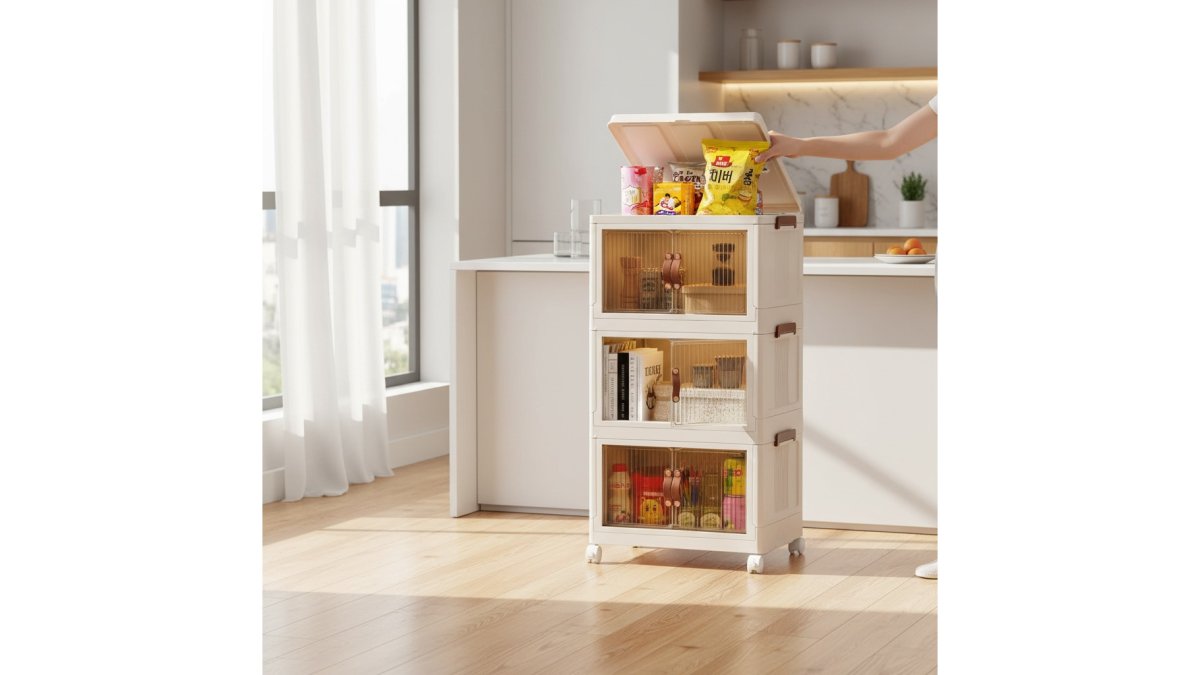
For hanging storage, the Modern Goods Living Foldable Hanging Storage Organizer uses durable polyester with three layers of compartments.
Kitchen and Pantry Storage
Kitchen storage combines accessibility with protection: pantry items must stay visible and organized while blocking moisture and pests. Modular solutions let you scale up as your collection grows.
Clear storage works well for pantry items because you can see contents at a glance. The Modern Goods Living Foldable Transparent Storage Box uses breathable PVC with a dustproof, waterproof design.
Though designed for books, these boxes work equally well for dry goods, baking supplies, or seasonal kitchen items.
Bathroom and Laundry Room Solutions
Bathrooms and laundry rooms pose the toughest storage challenge: high humidity, temperature swings, and moisture. Natural fibers struggle here; recycled plastic or synthetics handle it better.
The Modern Goods Living Heavy-Duty Oxford Storage Bag uses 600D Oxford cloth with waterproof variants available. Capacities range from 40L to 180L. Cost: $24.99. This material handles spills and moisture without absorbing water or developing mold.

In laundry rooms, stackable designs save floor space, and the wheeled bins mentioned earlier let you move supplies or seasonal items without lifting heavy containers.
Recycled Plastic Storage Containers: Durability and Performance
Recycled plastic containers are the practical middle ground: less aesthetically refined than natural fibers, but superior in durability, moisture resistance, and stackability.
The environmental case for recycled plastic is straightforward: it diverts existing waste from landfills and reduces demand for virgin plastic production. According to the EPA's recycling impact data, using recycled content in manufacturing reduces energy consumption and greenhouse gas emissions compared to virgin plastic production.
Performance-wise, recycled plastic handles temperature swings, humidity, and rough handling without degrading: bins don't crack when stacked, wheels hold up, and the material resists moisture.
The trade-off is visual: recycled plastic looks utilitarian, lacking the warmth of woven baskets or the elegance of canvas bags.
When evaluating recycled plastic options, look for post-consumer content percentages. Higher percentages indicate the product came from actual recycled waste rather than manufacturing scrap.
Sustainable Storage Solutions for Small Spaces
Small apartments and tight closets demand different strategies than spacious homes. Vertical storage, wall-mounted solutions, and foldable designs become essential rather than optional.
Linen Storage Bag – Foldable, Clothes, Quilt & Bedroom Organizer →
Vertical Storage and Wall-Mounted Options
Vertical storage multiplies your usable space without requiring additional floor area. Wall-mounted hanging organizers, over-the-door solutions, and tall stackable bins all work toward this goal.
The Modern Goods Living hanging organizer mentioned earlier excels here. Its three-layer design hangs on any rod or hook, instantly adding storage capacity.
Stackable storage bins create vertical towers on closet shelves or in corners.
Wall-mounted shelving paired with matching storage containers creates a cohesive, space-efficient system. The key is choosing containers that fit your shelf dimensions exactly, eliminating wasted space.
Foldable and Stackable Designs
Foldable storage collapses flat when empty, a crucial feature in small spaces. The Modern Goods Living storage bags and bins all fold or collapse for compact storage.
Stackable designs maximize vertical space on shelves, in closets, and under beds. The wheeled storage bins stack neatly, and the foldable transparent boxes collapse into thin bundles.
For small spaces, prioritize flexibility. You want storage that adapts as your needs change, that expands when you acquire seasonal items and collapses when you don't need it. Rigid furniture storage doesn't offer this adaptability.
How to Verify Sustainability Claims and Certifications
Greenwashing is rampant in sustainable storage. Companies slap "eco-friendly" labels on products without meaningful environmental commitments.
Genuine certifications come from third-party organizations with rigorous standards. Look for these markers:
Organic certifications (for natural fiber or cotton products): OCIA (Organic Crop Improvement Association), GOTS (Global Organic Textile Standard), or USDA Organic. These verify that materials were grown without synthetic pesticides or fertilizers.
Recycled content claims require documentation. Reputable manufacturers publish the percentage of post-consumer recycled material in their products.
Biodegradability claims should reference specific timeframes and conditions. "Biodegradable" without context is meaningless, everything biodegrades eventually, sometimes over centuries.
Sustainability reports from larger manufacturers show manufacturing practices, waste reduction, and supply chain transparency.
The FTC Green Guides provide guidelines for environmental marketing claims.
When in doubt, prioritize durability.
Comparing Storage Options: Price, Capacity, and Lifespan
Choosing between storage types requires balancing cost, capacity, durability, and your specific use case. A direct price comparison misses the real value question: how long will this product serve your needs?
Product Comparison Overview
| Product | Material | Starting Price | Capacity Range | Best For | Lifespan Expectation |
|---|---|---|---|---|---|
| Linen Storage Bag | Organic cotton-linen blend | $26.99 | 18L-210L | Closets, seasonal clothes, delicate items | 5-7 years |
| Heavy-Duty Oxford Bag | 600D Oxford cloth (waterproof variants) | $24.99 | 40L-180L | Moving, laundry, high-humidity areas | 4-6 years |
| Foldable Storage Bins with Wheels | Recycled plastic | $129.99 (3-piece set) | 78-193 QT total | Multi-room organization, accessibility needs | 5-8 years |
| Transparent Storage Box | PVC | $17.99 | Medium or Large | Books, dry goods, visible storage | 4-6 years |
| Hanging Storage Organizer | Polyester | $23.99 | 3-layer capacity | Closets, travel, small spaces | 3-5 years |
The wheeled storage bins represent the highest upfront cost but offer the most versatility.
The linen storage bags offer a balance of natural material, durability, and aesthetic appeal.
For budget optimization, the transparent storage boxes at $17.99 offer a low per-unit cost.
The hanging organizer at $23.99 solves a specific problem: adding storage capacity without floor or shelf space.
The real lifespan question depends on use intensity.
Price per year of use is the honest metric. Compare these rates, not just the sticker prices.
Conclusion: Building a Sustainable Storage System
Building a sustainable storage system means choosing products that will actually last, fit your specific spaces, and reduce your need for replacements.
Start by assessing your actual storage needs: which rooms need organization, what items do you store, and how often do you access them? A linen storage bag works beautifully in a closet.
The investment in quality sustainable storage pays dividends through years of use. You'll spend less replacing broken bins, less time reorganizing failed systems, and less mental energy on clutter.
Sustainable storage doesn't require replacing everything at once. Begin with one room or category, then expand as you see what works.
Frequently Asked Questions
Where can I buy sustainable home storage online?
Sustainable home storage is available through specialty retailers focused on eco-friendly products, as well as major online marketplaces. Modern Goods Living curates a selection of durable storage solutions including cotton-linen blend bags starting at $26.99, heavy-duty Oxford cloth organizers from $24.99, and stackable foldable bins. When shopping online, verify that products are made from renewable materials, recycled plastics, or natural fibers rather than virgin plastics.
What materials are best for eco-friendly storage bins?
The best eco-friendly storage materials include organic cotton and linen blends, which are durable and biodegradable; natural fibers, which are renewable and compostable; and recycled or post-consumer plastics, which reduce landfill waste. Cotton-linen storage bags offer moisture resistance and durability for long-term use, while heavy-duty Oxford cloth provides waterproof protection. Choose based on your storage environment: moisture-prone areas benefit from linen blends or waterproof options, while dry storage works well with natural woven materials.
What should I look for when buying sustainable home organizers?
Prioritize durability, material transparency, and functionality. Look for organizers made from renewable or recycled materials with clear product descriptions stating their composition. Check for features like stackability to maximize space, foldable designs for small apartments, and breathable construction to prevent moisture buildup. Verify certifications or sustainability claims through manufacturer websites. Consider capacity in liters or quarts, interior dimensions to ensure items fit your belongings, and whether the design suits your aesthetic. Modern Goods Living's organizers range from $17.99 for transparent storage boxes to $129.99 for multi-piece stackable sets.
Are recycled plastic storage containers durable?
Yes, recycled plastic storage containers are durable when made from quality materials like 600D Oxford cloth or heavy-duty plastics. These materials withstand daily use, resist moisture, and maintain structural integrity over years of storage. Recycled plastic options reduce environmental impact compared to virgin plastics while performing equally well. Heavy-duty Oxford storage bags, for example, are designed for long-term use in moving, travel, and everyday organization. Durability depends on construction quality and material thickness rather than whether the plastic is recycled or new.
How can I tell whether a home storage product is made sustainably?
Check the product description for specific material information: look for terms like 'organic cotton,' 'post-consumer recycled,' 'renewable fibers,' or 'certified sustainable.' Verify certifications from recognized bodies. Avoid vague language like 'eco-friendly' without material details. Transparent retailers list exact fiber content, production methods, and material sourcing. Read reviews mentioning longevity and durability, as truly sustainable products last years rather than months. Compare product lifespans.
